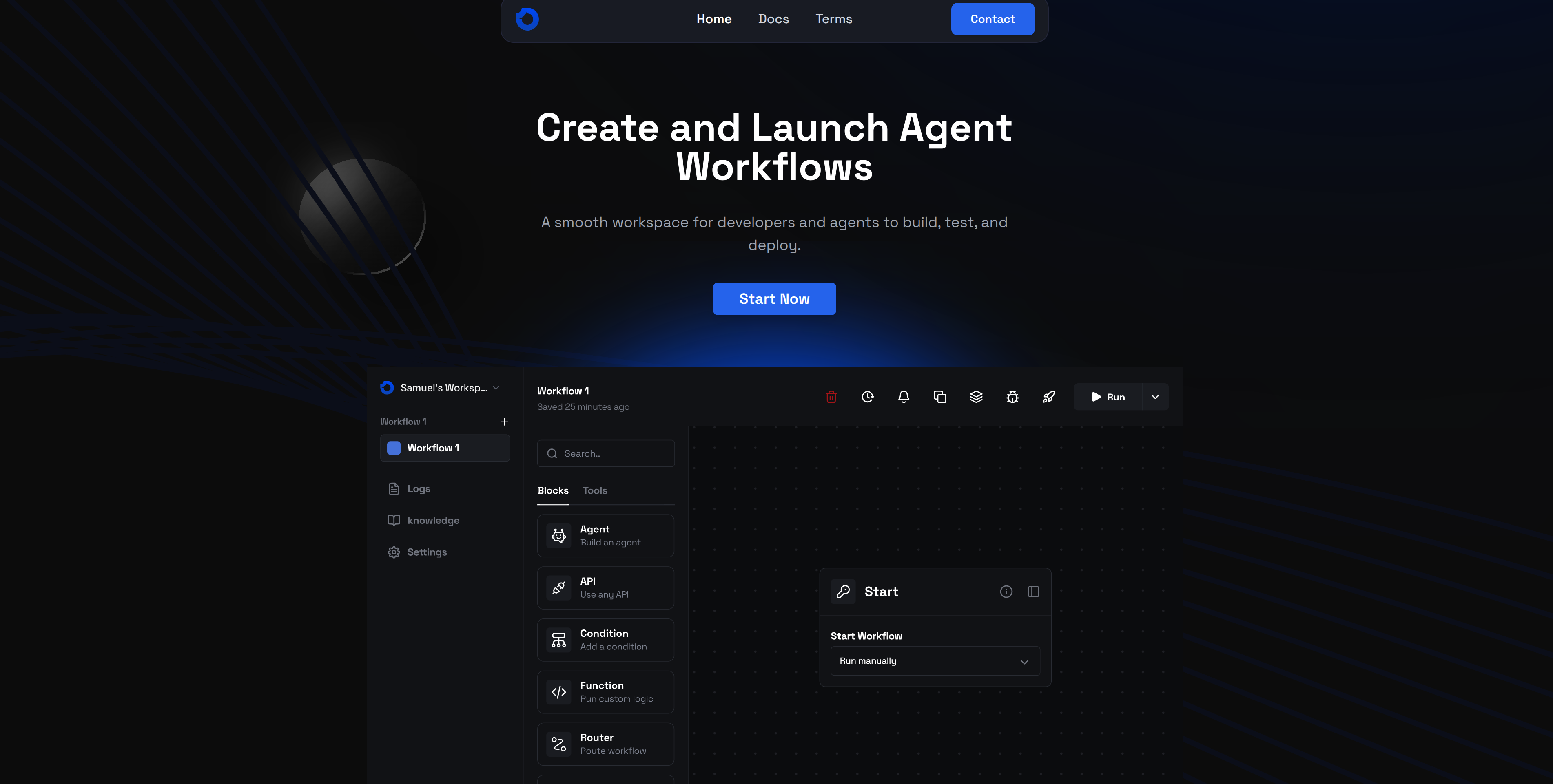
Overview
WorkFlow AI is an intelligent automation platform that lets teams define workflows in plain English and have them executed, monitored, and adapted by AI agents. It reduces context-switching and manual coordination by wiring together tools teams already use.
The Inspiration
I kept watching teams waste hours on repetitive task orchestration. Every sprint had the same bottlenecks — handoffs that fell through the cracks, status updates sent manually, approvals blocking progress. I wanted to explore whether AI could eliminate that invisible overhead entirely.
Tech Stack
Next.js 14 (App Router)
Server components reduced client bundle size and simplified data fetching patterns for the dashboard.
OpenAI GPT-4o
Used for natural language workflow parsing and intelligent decision branching within automation steps.
Prisma + PostgreSQL
Type-safe ORM with migrations made schema evolution safe across rapid iteration cycles.
TypeScript
Strict typing caught integration contract mismatches between the AI layer and the workflow engine at compile time.
Challenges & Solutions
AI responses were non-deterministic, causing workflow steps to produce different outputs on retry — which broke idempotency guarantees.
I introduced a structured output schema with JSON mode and added a deterministic hash of inputs as a cache key, so retries with the same context always returned the same result.
Real-time workflow status updates were creating excessive database polling from the frontend.
Replaced polling with Server-Sent Events streamed directly from the workflow execution engine, dropping server load by ~60% during peak runs.
What I Learned
- 01
Designing AI systems requires treating non-determinism as a first-class concern — not an edge case.
- 02
SSE is often a better fit than WebSockets for unidirectional real-time data in Next.js.
- 03
Workflow engines benefit from an explicit state machine model; ad-hoc conditional branching becomes unmaintainable fast.